A clearer read on your window.
Compare today's line with yesterday's.Test strips, plus an app that photographs each one, reads how dark the line is and keeps them in order. The thing you actually want to know is whether today is darker than yesterday, and that's exactly the thing that's hardest to judge by eye.
Retail ₹1,999 · Pre-book ₹1,199, 40% off · The founding price, held until we ship

You're looking for a rise, not a line
Roughly a day before you ovulate, luteinising hormone, LH, climbs sharply. That climb is what an ovulation strip detects, and ovulation usually follows somewhere around 24 to 36 hours later. Because sperm survive a few days, the useful window is the handful of days leading up to and including ovulation, not the day itself.
Here's the awkward part. LH is present in your urine all through the cycle, so there's almost always a second line. What matters is whether it's darker than the control line, and whether it's darker than it was yesterday. Judging that by eye, alone, in bathroom lighting, at a different time of day each morning, is genuinely difficult, and it's where most people get confused.
So the app does that part. It photographs each strip under a consistent crop, measures the line intensity, and puts them side by side in order. You see a curve, not a single ambiguous line.
- A rise, not a reading: the shape across days is the signal
- Consistent capture: same crop, same measure, every time
- Kept in order: today's strip sits next to yesterday's
- Your cycle, logged: so next month starts with last month's pattern
What you're actually paying for
Strips are a commodity. What you're really buying is whether you can read them.
- Enough strips to see a pattern: 50 in the kit. Kits that give you seven strips assume you already know when to test, which is the thing you're trying to work out.
- An app that reads the strip: most apps just let you type in "positive" or "negative". This one measures the line for you, which is the part people find hard.
- Your data stays yours: photographs and readings are stored on your phone, and no account is needed.
- Plain instructions: when to start testing based on your own cycle length, printed on the box rather than buried in an app onboarding flow.

What's actually in the box
| Tests | 50 LH urine test strips. Read at 10 minutes, valid for around 30. |
|---|---|
| App | Free companion app for Android and iOS. Photographs each strip, measures line intensity, charts the rise across your cycle. |
| Sensitivity | 25 mIU/mL, the standard threshold for LH strips. |
| Storage | Photos and readings are held on your device. No account is required to use the kit. |
| Shelf life | Printed on each foil pouch. Keep dry and at room temperature. |
| In the box | 50 strips, a slim storage case, an LH shade guide, a cycle tracker card, a collection cup, and a quick-start card with a cycle-length table. |
| Price | Retail ₹1,999 · Pre-book ₹1,199 |
Four steps, once a day
- Work out when to start from your cycle length, the card in the box has a table. For a 28-day cycle that's usually around day 10.
- Test at roughly the same time each day, ideally early afternoon rather than first thing. LH tends not to show up in the first urine of the morning.
- Dip the strip to the line for the time on the pouch, lay it flat, and read it at 10 minutes.
- Photograph it in the app. Keep going daily until you see the line peak and start to fall.
Drinking a lot of water in the hour before testing dilutes your urine and can wash out a real surge. It's the most common reason a test looks weaker than it should.
Not contraception, and not a diagnosis
This kit tells you when you're most likely to be fertile. It cannot tell you when you're safely not. Please don't use it, or any cycle-tracking method, to avoid pregnancy.
It also isn't a fertility test. A surge suggests ovulation is likely; it doesn't confirm one happened, and it says nothing about egg quality, tubes or sperm. PCOS in particular can produce raised LH all cycle long, which makes strips hard to interpret, if that's you, talk to your doctor before relying on them.
If you've been trying for a year, or six months if you're over 35, that's the point to see a doctor rather than buy more strips.

Questions people ask before buying
When in the day should I test?
The second line is always there. Am I always ovulating?
I got a positive. When should we try?
I've tested all month and never got a positive.
Does the app need an account?
What people are asking about the kit
The rest of the range
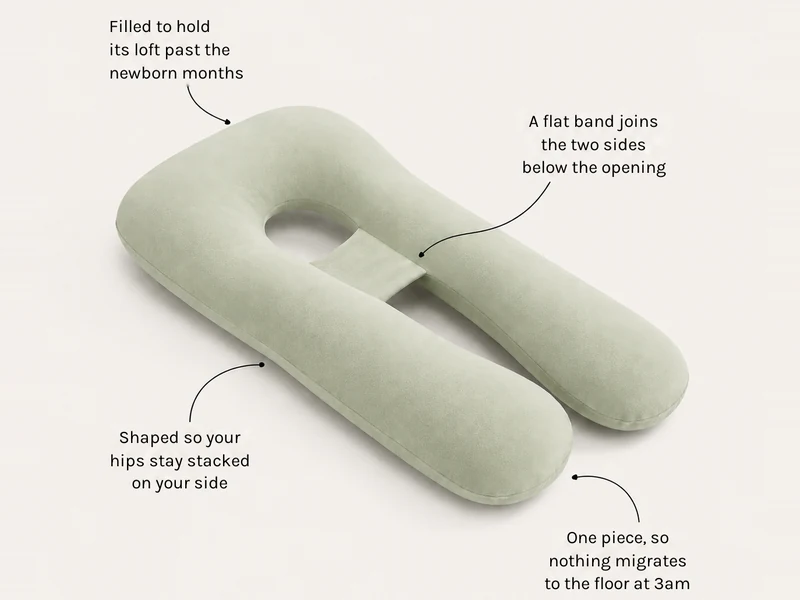 Pre-Pregnancy
Pregnancy Pillow
Sleep, back on the tableFull-body J-shape supporting bump, back and knees at once.
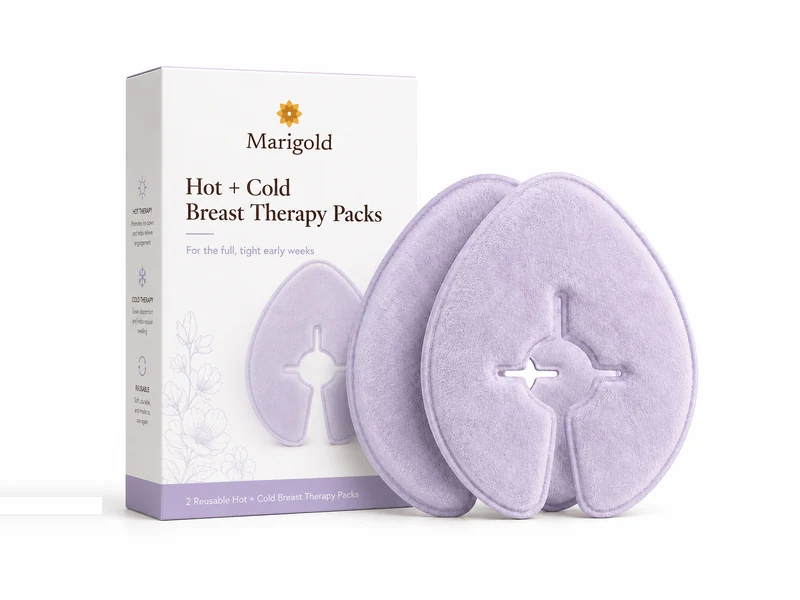 Breastfeeding
Breast Therapy Packs
Warm before, cold afterCurved gel packs that work hot or cold.
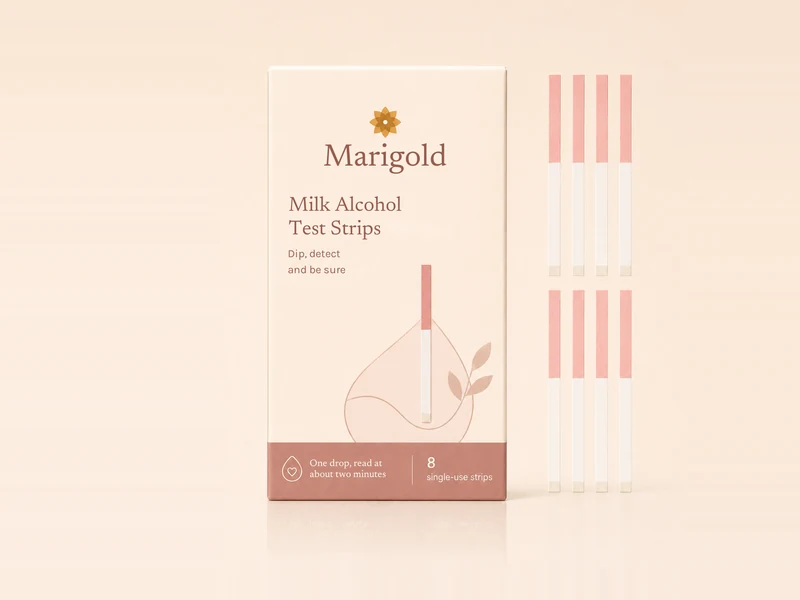 Breastfeeding
Milk Alcohol Test Strips
One less thing to wonder aboutA drop of milk, a reading in two minutes.
Reserve yours at ₹1,199
The founding price, 40% off the ₹1,999 retail price. Leave your details and we'll write to you when it ships.
Not sure this fits where you are? Two minutes, a short list for your stage →